You sit down at 8 AM, check your email, blink, and somehow it is 3 PM. Your lower back is stiff. Your shoulders are creeping toward your ears. By the end of the week, the dull ache has become a constant companion. If this sounds familiar, you are far from alone — desk-job back tension is one of the most common reasons new guests walk through our doors.
Why sitting tightens you up
Sustained sitting works against your body in a few connected ways:
- Your hip flexors shorten and stay tight
- Your glutes go quiet and weaken
- Your lower back muscles work overtime to hold you upright
- Your shoulders round forward and your upper back tightens
- Your neck juts forward to look at the screen
Each of these on its own is mild. Together, they create the classic desk-job pattern: tight hips, weak glutes, sore lower back, knotted shoulders, stiff neck.
The biggest mistake is expecting a single session to undo years of accumulated tension. The benefits compound — one session is a real but temporary reset; a regular rhythm changes your baseline.
Why stretching alone often does not cut it
Stretching helps, but it works on the surface. The deeper, knotted-up tissue in tight hip flexors, the upper trapezius, the lower back, and the glutes often needs hands-on pressure to release. That is where massage earns its keep.
What a massage can do
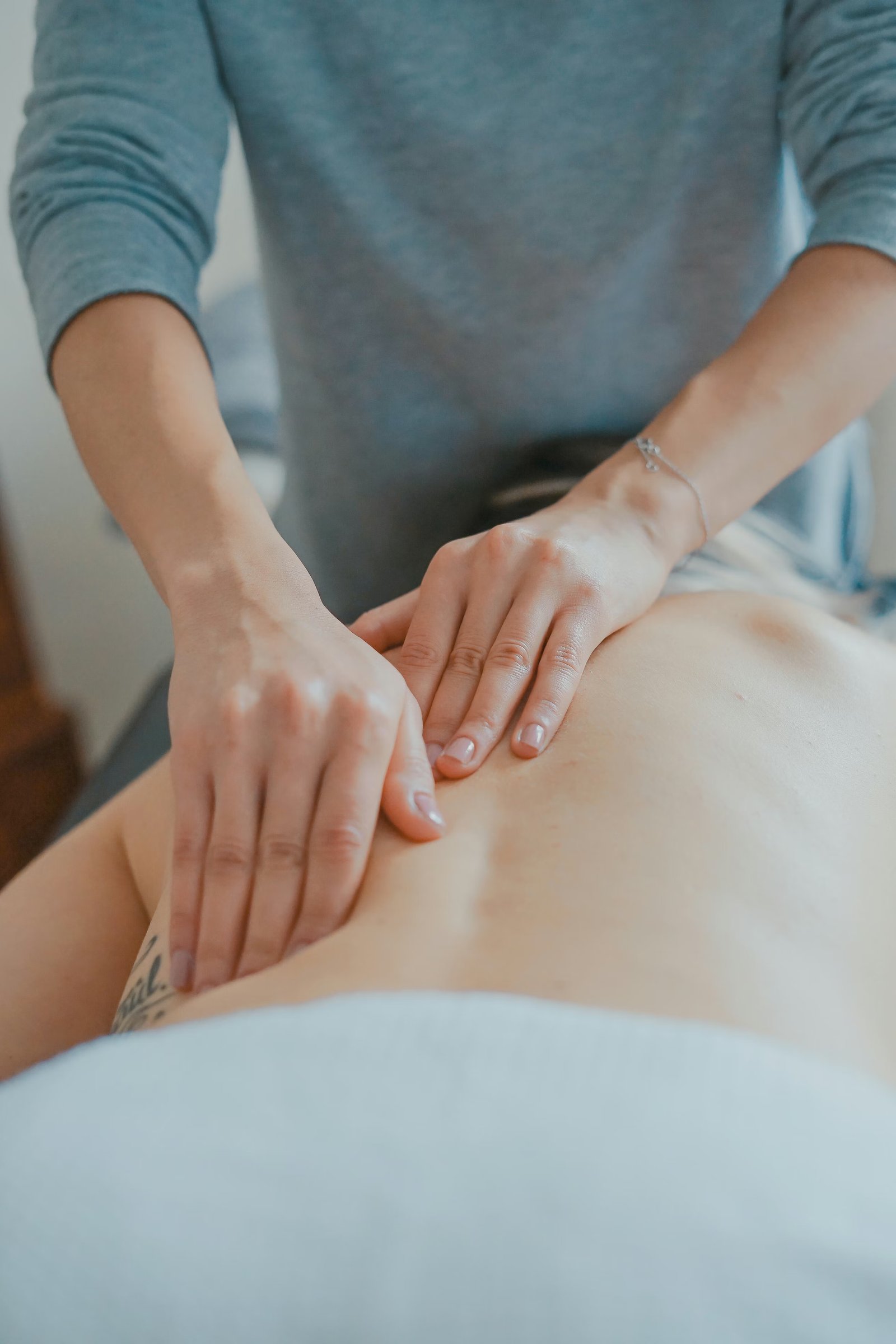
For desk-job lower back tension, a 60-minute massage typically focuses on:
- Lower back muscles: long strokes and held pressure to release the bands running along the spine
- Glutes: firm pressure into the deeper layers — surprisingly tight in desk workers
- Hip flexors: the front of the hip, which gets tight from sitting
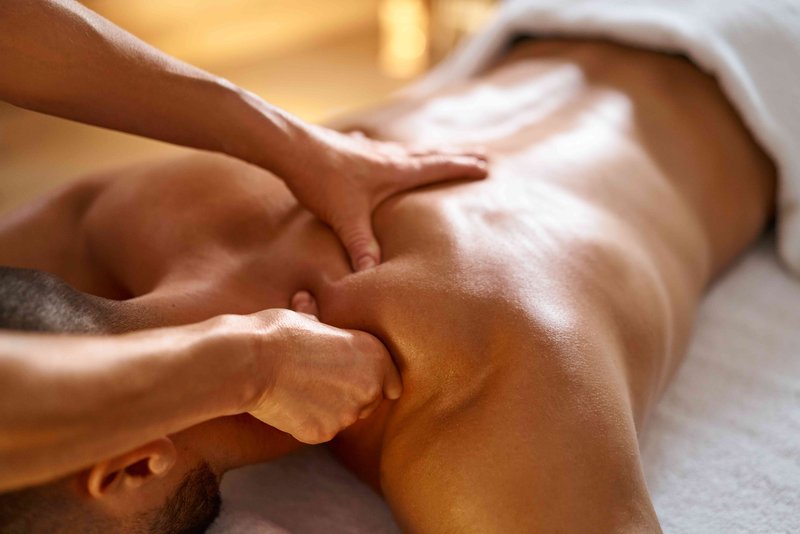
- Upper back and shoulders: to release the rounded-shoulder pattern
- Neck: the forward-head posture is connected to the whole chain
How often for real results
If your lower back has been tight for months or years, one massage will help — but the relief may only last a few days before the desk job pulls you back into the same pattern. To actually shift things:
- Reset phase: a session every 1–2 weeks for the first 4–6 weeks
- Maintenance phase: a session every 2–4 weeks ongoing
Pair the rhythm with daily five-minute desk stretches and a standing-desk hour each morning, and most desk workers see meaningful improvement within six to eight weeks.
Daily habits that help
- Stand up every 45 to 60 minutes — even a 60-second walk helps
- Set your monitor at eye level so your neck stops jutting forward
- Sit all the way back in your chair
- Do five minutes of hip flexor and hamstring stretches each evening
- Walk 15–20 minutes after lunch when you can
Specific work that helps desk workers most
Three muscle groups dominate desk-job back tension. (1) The lower back erector spinae and quadratus lumborum, which carry the load of forward-leaning posture all day. Focused deep-tissue work here in 10 to 15-minute segments provides the most direct relief. (2) The glutes and hip flexors, which weaken from sustained sitting and pull the lower back into compensatory tension — often as important as the lower back itself. (3) The upper traps, levator scapulae, and rhomboids — the upper-back zone that carries forward-rounded shoulder posture from keyboard and phone use. A 60-minute combination session typically spreads time across all three, weighted toward whichever area you say is worst that day.
When massage is not enough
If your back pain is sharp, radiates down a leg (possible sciatica from disc compression), worsens at night or with rest, started after a specific injury, or comes with numbness or tingling, see a doctor first. Massage helps with most desk-job related muscle tension but is not a substitute for medical care when something is structurally wrong. Massage can complement physical therapy and chiropractic but should not be the primary approach for diagnosed structural issues.
Stop by anytime
If your lower back has had enough, our spa is at 12994 Walsingham Road, Largo, FL. Walk in any day from 9 AM to 10 PM, or chat with us / call 727-307-1699. Office workers from the Seminole Blvd corridor, Pinellas Park, and St. Petersburg are some of our most consistent regulars — typically a Tuesday or Thursday after-work mid-week reset, plus a Friday or Sunday session to recover from the week.